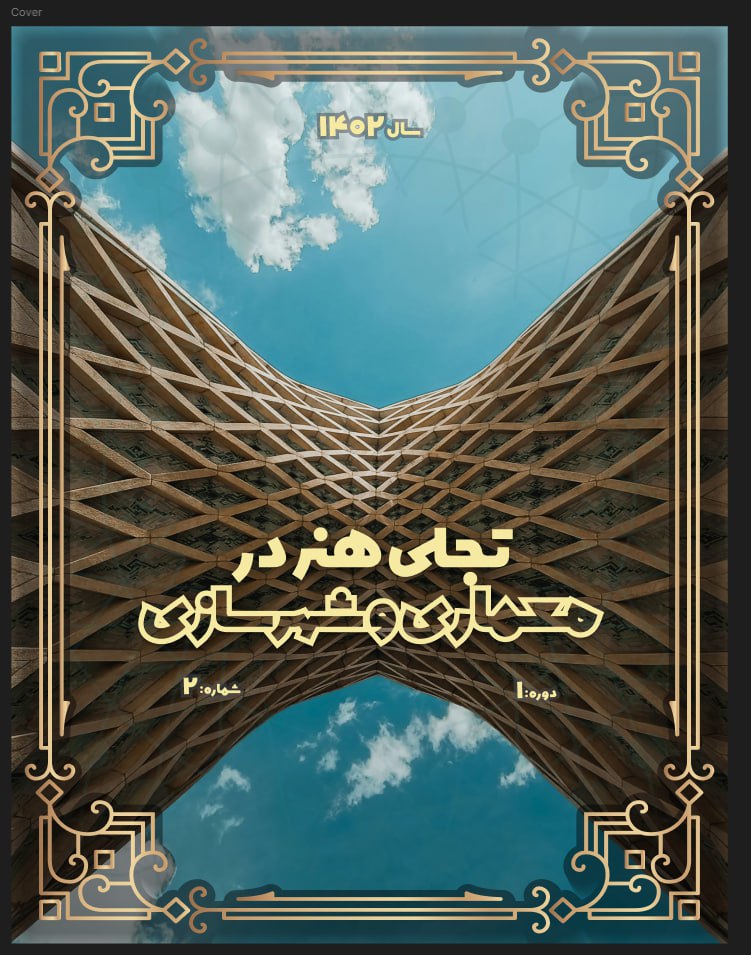
Revisiting Methodological Aspects in the Interactions between Form and Meaning in the Architectural Geometry of Sufi Tombs of the Timurid Period in Khorasan
Keywords:
Sacred geometry, Sequential exploratory design, Mixed-methods approach , Khorasan , Timurid period, Sufi tombs , Architectural geometry, Body-meaning interaction, Methodological reviewAbstract
The funerary architecture of Sufis in Timurid-period Khorasan represents one of the most prominent manifestations of the interaction among form, meaning, and geometry. However, a review of the literature indicates that most previous studies have either addressed these buildings through historical-typological description, focused solely on the analysis of geometry and formal proportions, or referred generally to “meaning in architecture” without systematically explaining “how” these three domains interact. This theoretical-methodological gap has created a deficiency in the deep understanding of the logic underlying the formation of this valuable heritage. Given the identity crisis in contemporary architecture and the need to reread meaning-generating principles in Iranian-Islamic architecture, reconsidering the methodology for studying the interactions among form, meaning, and geometry in rich historical contexts such as the Sufi tombs of Timurid Khorasan appears necessary. This study was conducted with the aim of rereading and identifying the methodological aspects effective in studying the interactions between form and meaning in the formation of the architectural geometry of these tombs. The present study is fundamental-theoretical in nature and was conducted using the strategy of “systematic review and qualitative meta-analysis.” The research population included 120 domestic and international scholarly sources related to the domains of form, meaning, geometry, and funerary architecture, which, after a three-stage screening process, were examined using qualitative content analysis and three-level coding: open, axial, and selective coding. The findings indicate that the most important methodological aspects in this field fall into three categories: (1) purely qualitative approaches, including phenomenological, semiotic, and hermeneutic approaches, which are suitable for uncovering layers of meaning; (2) purely quantitative approaches, including proportional analysis and spatial statistics, which are applicable for the objective measurement of components; and (3) mixed-method approaches with a sequential exploratory design, which are introduced as the most comprehensive strategy for explaining the multilayered interactions among form, meaning, and geometry. Finally, a five-step methodological model based on a mixed-method approach is proposed.
Downloads
References
1. Nasr SH, Ghasemian R. Islamic Art and Spirituality. Tehran: Hekmat; 2015.
2. Ardalan N, Bakhtiar L. The Sense of Unity: The Sufi Tradition in Persian Architecture. Chicago: University of Chicago Press; 1975.
3. Pallasmaa J. The Eyes of the Skin: Architecture and the Senses. 2nd ed. Chichester: Wiley; 2005.
4. Critchlow K. Islamic Patterns: An Analytical and Cosmological Approach. London: Thames and Hudson; 1976.
5. Soltanzadeh H. How shrines are formed and their architecture. Anthropology Letter. 2009;7(11):40-64.
6. Azarkhordad F, Zarei ME, Hashemi Zarjabad H. Evaluation and recognition of applied geometry of the Timurid era in the design of the tomb of Molana Zeyn al-Din Abu Bakr Taybadi. Iranian Archaeological Research. 2018;8(17):107-25.
7. Ebrahimi H. A descriptive study of Timurid-era mausoleum architecture. Scientific Journal of Iranian Restoration and Architecture. 2019;8(16):53-68.
8. Rahmani H, Nourmohammadzadeh H. Comparison of the components of meaning structure with physical structure in the historical complex of Yazd city. Iranian-Islamic City Studies. 2019;9(34):25-42.
9. Raeisi MM, Noghrekar A. Ontology of meaning in architectural works. Hoviat Shahr. 2015;9(24):47-58.
10. Hosseini SR. A study of the formation process of funerary complexes in Iranian architecture of the Islamic period. Bagh-e Nazar. 2009;6(12):69-82.
11. Norberg-Schulz C. Genius Loci: Towards a Phenomenology of Architecture. New York: Rizzoli; 1979.
12. Eco U. A Theory of Semiotics. Bloomington: Indiana University Press; 1979.
13. Burckhardt T. Art of Islam: Language and Meaning. Bloomington: World Wisdom; 2009.
14. Adeli S, Nadimi H. Form as affordance: Theoretical explanation and conceptual framework of meaning in architecture. Soffeh. 2022;32(96):21-40.
15. Nasser N. Beyond the veil of form: Developing a transformative approach toward Islamic sacred architecture through designing a contemporary Sufi center. Religions. 2022;13(3):1-18.
16. O'Kane B, Akhshini A. Timurid Architecture in Khorasan. Mashhad: Islamic Research Foundation of Astan-e Quds Razavi; 2007.
17. Wilber DL. Timurid Architecture in Iran and Turan. Tehran: Cultural Heritage Organization; 1995.
18. Karami Darbandi V, Khazaei M. Study and analysis of geometric proportions in the works of Qavam al-Din Shirazi: Case studies of Goharshad Mosque in Mashhad and Goharshad Mosque in Herat. Scientific Journal of Iranian Restoration and Architecture. 2021;11(28):28-42.
19. Najafgholipour Kalantari N, Etesam I, Habib F. Manifestation of geometry and proportions in traditional buildings of Iranian architecture in the geographical area of Azerbaijan. Geography of the Land. 2017;14(54):103-15.
20. Sahhaf SMK. Meaning in Iranian architecture. Hoviat Shahr. 2016;10(25):51-60.
21. Taghdir F, Samimifar M. The role of memory as the treasury of meaning and imagination as the treasury of form in the architect's shaping of the process of creation and perception of architectural works based on Transcendent Theosophy. Soffeh. 2022;32(96):21-40.
22. Azimi M. Explaining the position of meaning and imagination in the architectural design process. Islamic Architecture Research. 2019;7(3):77-91.
23. Amirashayari Savareh Z, Etesam I, Habib F. Explaining the role of intelligible and sensible geometry in Iranian-Islamic architecture. Iranian Architecture Studies. 2022;11(22):45-64.
24. Sajadzadeh H, Sohrabi N. A comparative study of transformations in physical structure and meaning structure with emphasis on spatial integration analysis: Case study of Hamadan Bazaar. Geography and Urban-Regional Planning. 2021;11(39):131-56.
25. Malek Kavkani A, Mozaffar F, Vafamehr M. Manifestation of meaning and beauty in the geometry and decorations of mosques. Islamic Architecture Research. 2023;11(3):107-23.
26. Rezapanah M, Habib F, Etesam I. Identification and explanation of cultural components affecting the formation of funerary architectural ornaments: Case study of the historical tomb of Sheikh Abd al-Samad and the contemporary tomb of Hafez. Islamic Art Studies. 2024;21(52):145-68.
27. Jalilinia S, Soltanzadeh H, Habib F. The position of Sufi funerary complexes in Iranian-Islamic architecture of the Azerbaijan region from the perspective of cultural history. Islamic Architecture Research. 2023;11(4):57-76.
28. Ebrahimi A, Gharehbaglou M, Farshchian A. The place of theoretical wisdom in the application of architectural geometry by Islamic mathematicians: The period from the 4th to the 11th century AH. Journal of Islamic Architecture. 2021;6(4):215-28.
29. Farshid Rad F, Etessam I, Ghobadian V. A comparative study of fractal geometry layouts in organizing the architecture and ornamentation of Nasir al-Mulk Mosque. Negareh. 2024;19(70):45-62.
30. Raghani S, Brar T, Kamal M. Architectural strategies for enhancing mental well-being and spiritual engagement: A multidisciplinary approach to mindfulness-oriented design. City, Territory and Architecture. 2025;12:41.
31. Ahmed H, Shahid U. Sufi mysticism to the formation of sacred architectural realism. International Social Science Bulletin. 2025;3(6).
32. Creswell JW. Research Design: Qualitative, Quantitative, and Mixed Methods Approaches. 4th ed. Thousand Oaks, CA: SAGE Publications; 2014.
33. Creswell JW, Plano Clark VL. Designing and Conducting Mixed Methods Research. 3rd ed. Thousand Oaks, CA: SAGE Publications; 2017.
34. Graneheim UH, Lundman B. Qualitative content analysis in nursing research: Concepts, procedures and measures to achieve trustworthiness. Nurse Education Today. 2004;24(2):105-12.
35. Strauss A, Corbin J. Basics of Qualitative Research: Techniques and Procedures for Developing Grounded Theory. 2nd ed. Thousand Oaks, CA: SAGE Publications; 1998.
36. Landis JR, Koch GG. The measurement of observer agreement for categorical data. Biometrics. 1977;33(1):159-74.
37. Bachelard G, Jolas M. The Poetics of Space. Boston: Beacon Press; 1994.
38. Daram Y, Mokhtabad Amrei SM, Zabihi H. Fourier spectral analysis of architectural rhythms: Case study of historic Isfahan. Nexus Network Journal. 2026;28:45-62.
39. Wagiri F, Stavric M, Shih SG. Thinking through geometry: Bridging polyhedral structures, parametric modeling, and digital fabrication in architectural education. Nexus Network Journal. 2026;28:112-30.
40. Morse JM. Principles of mixed methods and multimethod research design. In: Tashakkori A, Teddlie C, editors. Handbook of Mixed Methods in Social and Behavioral Research. Thousand Oaks, CA: SAGE Publications; 2003. p. 189-208.
41. Hejazi M, Mehdizadeh Saraj F. The relationship between meaning, beauty, form, and structure in Islamic architecture. Hoviat Shahr. 2014;8(18):47-58.
42. Raeisi MM, Noghrekar A. The process of formation and emergence of meaning based on the Islamic perspective. Islamic Art Studies. 2013;10(19):47-62.
43. Chandler D. Semiotics: The Basics. 2nd ed. London and New York: Routledge; 2007.
44. Eliade M, Trask WR. The Sacred and the Profane: The Nature of Religion. New York: Harcourt; 1959.
45. Hayati H, Behdarvand O. Explaining the spatial organization pattern in Iranian-Islamic funerary architecture. Iranian Architecture Studies. 2022;11(21):85-104.
46. Sheikh al-Hokamaei M, Nejad Ebrahimi A. Recognition of the architectural pattern of Timurid-period khanqahs with reference to documents and texts. Scientific Journal of Architecture in Hot and Dry Climate. 2021;9(14):99-117.
47. Alborzi E, Habib F, Etesam I. Representation of the effect of light on the semantic life of architectural spaces: Case study of Sheikh Lotfollah Mosque. Islamic Architecture Research. 2019;7(3):5-20.
48. Jencks C. The Language of Post-Modern Architecture. New York: Rizzoli; 1977.
49. Burckhardt T, Rajabnia M. Islamic Art: Language and Expression. Tehran: Soroush; 1999.
50. Otto R, Harvey JW. The Idea of the Holy. New York: Oxford University Press; 1958.
51. Rossi A, Ghirardo D, Ockman J. The Architecture of the City. Cambridge, MA: MIT Press; 1982.
52. Norberg-Schulz C. Architecture: Meaning and Place: Selected Essays. New York: Electa/Rizzoli; 1986.
53. Pirnia MK, Memarian G. Introduction to Islamic Architecture of Iran. 7th ed. Tehran: Soroush Danesh; 2023.
54. Nasr SH. Islamic Art and Spirituality. Albany, NY: State University of New York Press; 1987.
55. Patton MQ. Qualitative Research & Evaluation Methods: Integrating Theory and Practice. 4th ed. Thousand Oaks, CA: SAGE Publications; 2015.
56. Field A. Discovering Statistics Using IBM SPSS Statistics. 5th ed. Thousand Oaks, CA: SAGE Publications; 2018.
57. Pallant J. SPSS Survival Manual: A Step-by-Step Guide to Data Analysis Using IBM SPSS. 7th ed. London: Routledge; 2020.
Downloads
Publication Timeline
- Submitted
- Revised
- Accepted
Issue
Section
License
Copyright (c) 2026 Atiyehi Afkari Mehraban (Author); Amir Farajollahi Rod; Vahid Ahmadi, Mahdi Sahragard (Author)

This work is licensed under a Creative Commons Attribution-NonCommercial 4.0 International License.